
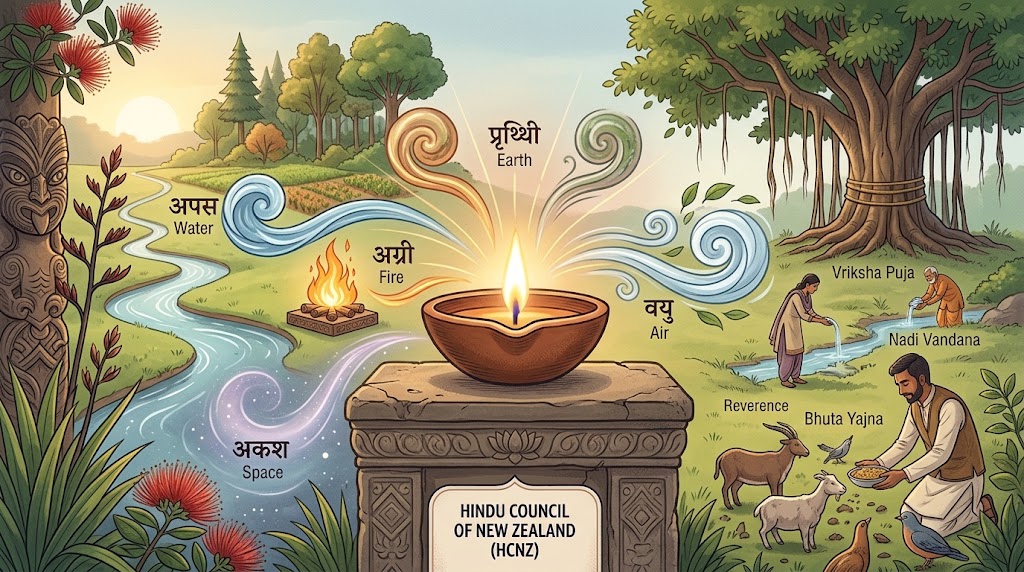

In an era where environmental sustainability has become a critical global priority, ancient philosophy offers remarkably modern insights into ecological care. In Hindu Dharma, nature (Prakriti) is not viewed as a resource to be exploited, but as a sacred, living ecosystem in which human beings are deeply intertwined partners.
The Sacredness of Nature: Prakriti and Pancha Mahabhuta
At the core of Hindu environmental thought is the understanding that the universe is composed of the Pancha Mahabhuta—the five great physical elements:
- Prithvi (Earth): The provider of stability, food, and physical foundation.
- Apas (Water): The source of purification, life, and fluidity.
- Agni (Fire): The transformative force of light, warmth, and metabolism.
- Vayu (Air): The breath of life (Prana) that sustains all breathing beings.
- Akasha (Space/Ether): The expansive element that holds all existence together.
Because these elements are recognized as manifestations of cosmic consciousness, harming the environment is seen as a disruption of cosmic balance (Rta).
Reverence for Rivers, Trees, and Animals
Everyday Hindu rituals embed respect for nature into daily habits:
- Sacred Rivers (Nadi Vandana): Rivers such as the Ganges, Yamuna, and Kaveri are revered as life-giving mothers (Mata). Water rituals emphasize gratitude for the life-sustaining nourishment they provide.
- Tree Worship (Vriksha Puja): Trees like the Peepal, Banyan, Tulsi (Holy Basil), and Neem are protected and nurtured. Beyond their spiritual significance, these plants are known for high oxygen output and medicinal qualities.
- Compassion for Animals (Bhuta Yajna): The tradition of feeding birds, stray animals, and insects before consuming one's own meal reinforces the understanding that non-human life shares equal right to the earth's resources.
Ahimsa as an Ecological Ethic
The principle of Ahimsa (non-violence) extends far beyond human relationships to encompass all living creatures and natural habitats. Practicing gentle living, reducing waste, and opting for plant-based diets are natural extensions of Ahimsa, aimed at minimizing the ecological footprint on the planet.
Lessons for Contemporary Sustainable Living
Applying these traditional insights to modern life offers practical steps for environmental harmony:
- Mindful Consumption: Choosing sustainable, locally sourced products and avoiding unnecessary wastage of energy and water.
- Eco-Friendly Celebrations: Reverting to organic colors, natural clay lamps, and eco-conscious materials during festivals.
- Conservation as Service: Engaging in tree planting, beach cleanups, and local conservation initiatives as a form of sacred service (Seva).
By reconnecting with the timeless wisdom of Sanatana Dharma, environmental protection ceases to be a mere regulatory duty—it becomes a joyful, sacred commitment to preserving the balance of our shared home.