
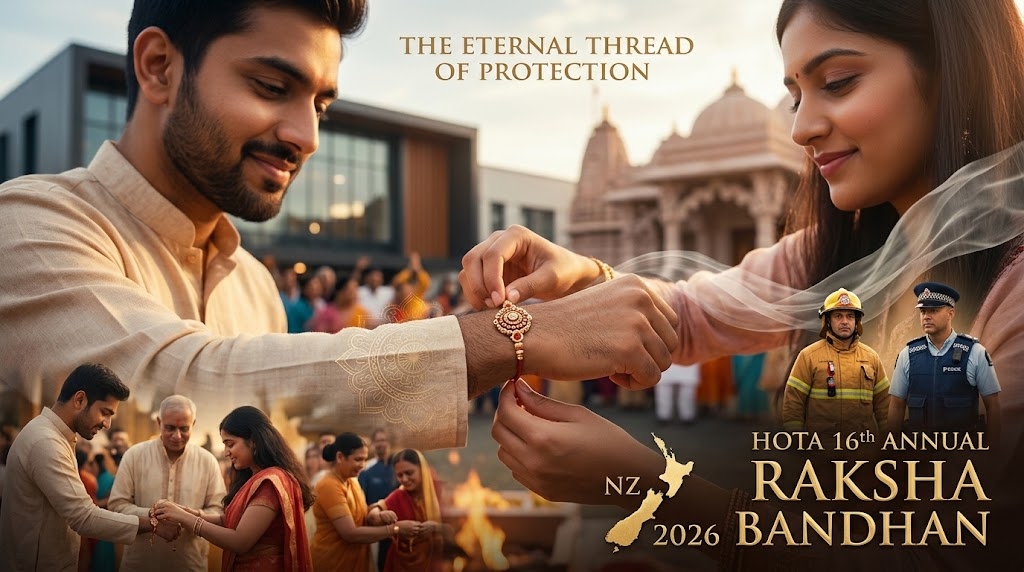

Raksha Bandhan, a sacred festival in the Vedic tradition, signifies far more than a ceremonial exchange between siblings. Rooted in the Sanskrit terms raksha (protection) and bandhan (to tie), the festival centers around the tying of the rakhi—a sacred thread that embodies duty, goodwill, and mutual reverence. Across centuries, this practice has preserved core social values, anchoring interpersonal bonds in the foundational tenets of dharma.
Philosophical Roots: Dharmo Rakshati Rakshitah
At the spiritual core of Raksha Bandhan lies the ancient Maxims of the Manusmriti: “Dharmo rakshati rakshitah”—dharma protects those who protect dharma. Within Hindu philosophy, dharma represents cosmic order, ethical duty, righteousness, and truth.
The act of tying a rakhi is a physical manifestation of this ethos. It serves as a pledge: the bearer of the thread commits to upholding righteousness and offering protection, whilst the recipient invokes cosmic grace for the benefactor’s safety and spiritual well-being. The protection spoken of is non-exclusive; it encompasses physical safety, emotional support, and the safeguarding of moral values within society.
Scriptural Foundations: The Bond of Draupadi and Sri Krishna
While several accounts in Hindu scriptures illuminate the origins of Raksha Bandhan, the episode between Draupadi and Sri Krishna in the Mahabharata exemplifies the profound nature of this spiritual bond.
According to the narrative, when Sri Krishna sustained a bleeding injury on his finger after deploying the Sudarshana Chakra against Shishupala, Draupadi did not hesitate. Tearing a strip of cloth from her silk sari, she bound His wound to stem the flow of blood. Touched by her selfless affection, Sri Krishna promised to protect her whenever she called upon Him.
This pledge was fulfilled during the trial of the Sabha Parva, when Draupadi faced ultimate humiliation in the royal court. As she called upon Sri Krishna in utter surrender, He provided an endless stream of garment to uphold her dignity. This sacred interaction established that the bond of protection transcends mere biological lineage, residing instead in unconditional loyalty, respect, and righteous intent.
Traditional Sibling Dynamics and Modern Expansion
Traditionally, Raksha Bandhan served to fortify domestic ties. Brothers pledged physical and social security to their sisters, who in turn prayed for their longevity and prosperity.
In contemporary practice, this dynamic has evolved to reflect wider social responsibilities. The essence of the thread is extended to cousins, friends, spiritual guides, and civic guardians. It reinforces the Hindu vision of Vasudhaiva Kutumbakam—the world as one unified family—transforming an intimate family custom into an act of communal solidarity.
Celebrating the 16th HOTA Raksha Bandhan Event in New Zealand
In Aotearoa New Zealand, the Hindu diaspora actively maintains these traditions while adapting them to a multicultural context.
Marking a significant milestone, the Hindu Organisations, Temples and Associations (HOTA) Forum New Zealand, under the aegis of the Hindu Council of New Zealand, will convene the 16th annual HOTA Raksha Bandhan celebration on 12 September 2026 at the Swaminarayan Complex in Papatoetoe, Auckland.
This annual event extends the concept of raksha (protection) into public service. A central feature of the gathering is the honouring of New Zealand’s emergency service personnel—including members of the New Zealand Police, Fire and Emergency New Zealand, and St John Ambulance. By tying rakhis on the wrists of these front-line responders, the community expresses gratitude to those who uphold civic peace and safety, seamlessly connecting ancient spiritual philosophy with civic life in New Zealand.